
When military families get PCS orders, complexity, frustration and roadblocks can abound. And for many spouses, one of the most complicated items on their PCS to-do list doesn’t involve any kind of packing at all; it’s navigating how their professional licenses are recognized in their new state. This process can be wrought with waiting and dense with delays. South Dakota, however, is on a mission to cut some of this red tape.
Thirty days
On March 22, 2019, Governor Kristi Noem signed HB1111, a bill designed specifically to expedite the professional licensing process for military spouses assigned to Ellsworth Air Force Base and other locations in the state. At the signing, she framed the issue as both economic and personal. “More than 20 percent of military spouses cite state licensing regulations as one of their greatest challenges,” Gov. Noem said. “The bill I’m signing today changes that reality for South Dakota’s military families, fast-tracking military spouses through the licensing process and expanding the experienced talent pool of South Dakota’s workforce.”
The law requires that military spouse licenses be issued within 30 days, a deliberate step towards making military life a little bit simpler. For the spouses navigating these licensing systems today, the impact of this law shows up in ways that are less political and more real for their families: whether the income from their jobs can start coming in next week or next month — or even later.
Noticeably different
Angie Lord is a registered dietitian who trained in nutrition at Kansas State University. She’s worked across multiple states including Texas, Louisiana, Oklahoma, Virginia and South Dakota. Her clinical work eventually brought her into oncology nutrition at Ochsner LSU Health, where she now works remotely. Even though her primary work location is in Louisiana, she holds professional licenses in Louisiana and South Dakota .
Each move required a new round of verification: proof of good standing, transcripts, exam records and state-by-state confirmation. Even when she was already licensed elsewhere, each board treated the process as a fresh review. “It just got harder every single time,” she said. “It makes you not want to keep doing it because it’s time consuming and not really that important to the actual work.”
These major delays can cause some real chaos in the lives of military families. In some states, processing can take multiple months. Texas, in Angie’s experience, took over eight weeks. This level of delay can mean job offers are sometimes paused before they begin. “You can get offered a job, but you can’t actually start until you’re licensed,” she said. “So it just adds more waiting and more stress.”
South Dakota, she said, felt noticeably different. When she applied here, she found a military spouse pathway that moved quickly and connected her directly with someone who understood the process. Instead of tracking down records from every previous state, she was able to provide proof of an active license and received approval within days. “It was super fast and super easy,” she said.
Angie’s experience reflects how fast-tracked license transfers can reduce delays for military spouses. Policies like this are bigger than convenience — they’re about recognizing that military spouses already carry the uncertainty of relocation, separation and rebuilding community. Simplifying licensure removes one more obstacle from an already complicated transition. “It really is a service for military spouses,” she said.
Angie also pointed to the work of Lauren Kimball, a military spouse formerly stationed at Ellsworth Air Force Base. Lauren advocated heavily for military spouse licensing reform in South Dakota, including testimony in Pierre that helped make HB1111 a reality.
A one-week clock
For cosmetologist Cora Roberts, licensing was the determining factor between a booked calendar and a blank one. She moved from South Carolina to South Dakota on a tight timeline after her husband’s military assignment and had already secured work at Ulta Beauty before arriving. That meant her cosmetology license transfer needed to happen immediately. “I only had one week,” she said. “I needed my license transferred or at least proof it was switched over.”
Like many military spouses in licensed fields, she ran into the unevenness of state systems. Some offices are familiar with military transfers and move quickly. Others aren’t sure where to start. The difference often comes down to finding the right person who understands how to route the request. After daily phone calls with South Carolina licensing officials, Cora connected with someone who helped push the process forward, allowing her to begin working while the full paperwork caught up. “I think if that guy didn’t help, I don’t know where I would have been,” she said.
Once in South Dakota, free from the prolonged bureaucratic battles she might have faced settling into other states, Cora had the professional bandwidth to step into something larger: helping launch a new salon. She, along with a partner, recently opened Vera Luna Beauty Collective, a salon concept designed to bring together hair, skin and nail services under one roof, with a more independent, boutique feel than larger retail environments. For Cora, South Dakota has become a place to reset and launch a new chapter of her life and career.
Fast timelines
Another military spouse, Hannah Simms, is a licensed clinical therapist. The practice she founded, Rise Alone Therapy, is a virtual mental health practice built specifically to serve active duty service members and military families. What began in South Carolina has since relocated through New Mexico and South Dakota alongside her husband’s Air Force career, growing each time the family moved.
Her path into social work started in clinical settings, including dialysis care, where she worked with patients navigating chronic illness and long-term treatment decisions. But over time, she began to see a gap in care for military families, especially in traditional therapy models that didn’t account for deployment cycles, relocation or the emotional strain of constant transition. “I would say these military families are not getting served with the kind of therapy they really need,” she said. “I had a personal experience, too, where we went to marriage counseling and the provider just didn’t understand deployment life.”
That gap became the foundation for her practice. Today, Rise Alone Therapy operates across roughly ten states with a team of nine clinicians, many of whom are military spouses or come from military-connected families themselves. The model is intentionally built around mobility. Hannah’s experience with licensure reflects an increasing efficiency in multiple states. In New Mexico, approval came in about four weeks. In South Dakota, her license was issued in roughly three weeks — one of the fastest timelines she encountered. “South Dakota was fantastic,” she said, grateful for South Dakota and the fast-tracked licensing processes of other states.
The right thing to do
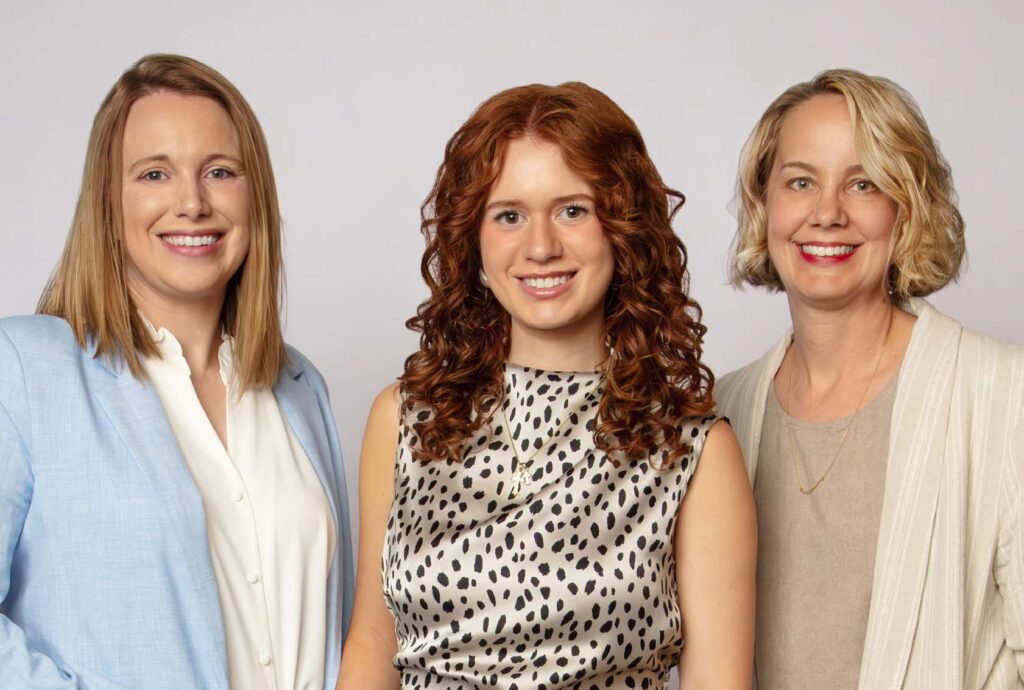
Taken together, the three experiences show that South Dakota’s system is growing more and more efficient: faster issuance, clearer pathways for military spouses and more direct communication between applicants and licensing staff.
Instead of months-long uncertainty, spouses describe timelines measured in weeks. Instead of anonymous call centers, they often encounter individual staff members who can move applications forward quickly when needed. HB1111 aimed to reduce friction for military families, and it has. The 30-day issuance requirement has clearly shortened timelines. As these interviews show, policies that intentionally serve military members improve quality of life and, as former Gov. Noem pointed out, can have a positive economic impact. But more than that, when lawmakers, the armed forces and community members work together to remove unnecessary barriers for military families, it’s simply the right thing to do.
By Stephen Simpson
Photos by Greg Geiger